


 From April to May 2007, some of the most celebrated scholars of American Literature, cultural studies, and California history joined with noted artists, performers, and photographers for a unique John Steinbeck celebration at San Diego State University. Homer from Salinas: John Steinbeck's Enduring Voice for California, edited by note American Studies scholar William Nericcio, collects these lectures, screenings, debates, discussions, and visual artifacts into one handy volume that unfolds as a bracing melange of old school conference proceedings, next-generation Web 2.0 journalism, and a John Steinbeck scrapbook. The collection, with an introduction by Nericcio, includes outstanding pieces by Jeffrey Charles, Charles Wollenberg, William Deverell, Francisco X. Alarcon, Hernan Moreno-Hinojosa, Pam Munoz Ryan, Paul Wong, Fred Gardaphe, Arturo J. Aldama, Michael Harper, Joanna Brooks, Arthur Ollman, Louis Hock, and Susan Shillingslaw.
 If you recognized either of these men, it was probably the one on the right, American novelist Herman Melville, author of Moby-Dick. But who's the other guy, you ask?


 That being said, Aldama’s Latinx Comic Book Storytelling: An Odyssey
by Interview is an insightful and entertaining experience for readers
of all walks. It enlightens them to the writing process and history of many of
their favorite comics while simultaneously providing an interesting cultural
study in regards to the growing prominence of Latinx contributors to the comic
medium. Aldama’s text directly addresses
the question of Latinx representation within the genre. As such, it
provides an answer: “The time for waiting is over. Comics by and about Latinos
are here to stay. The authors and artists featured in this book are living
proof” (269).


 pacificREVIEW’s 2016 issue Lurking Anonymity explores the mysterious—and perpetually convoluted—relationships that are now sustained within the digital age. This intricate entanglement between technology and our sense of self oscillates between virtual life and real life, with our id now being composed of immediate gratification through like buttons that have disguised themselves as intimacy. Lurking Anonymity captures the millennial perspective, with thought provoking and imaginative pieces, through diverse mediums varying from fiction and poetry to artwork and even an analytical essay. The issue often times condemns the hold that the virtual realm has on reality, but it also brilliantly promotes the strength of this simulated world through its ability to connect in unconventional ways. Lurking Anonymity explores the perceptions of current society within the modern world and its effect on thought processes and personal relationships making the issue one that is undoubtedly a snapshot of this generation.
 Repetition. In any narrative structure the function of repetition as a literary device serves more than just a superficial way of attaching meaning to an object or character. Authors employ these devices to expand significance and implore the reader to actively assign connections in the narrative. Daniele Chatelain breaks down this idea of repetition within narrative structures in her book “Perceiving and Telling: A Study of Iterative Discourse” and ultimately outlines a way of recognizing these “four dimensional” (187) environments working within stories. Chatelain explains that utilizing iterative discourse in other areas of interpretation (such as narrative structure, character development, story themes, etc.) can render a seemingly one dimensional text into a multi-faceted piece which questions the idea of space and time.

 |
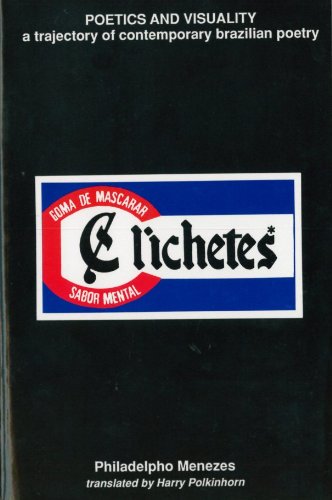
| "ruasol" by Ronaldo Azeredo, 1957 |
 |
| "Sick transit" by José Paulo Paes, 1973 |
 San Diego State University Press is proud of having collaborated with the San Diego Natural History Museum to produce a catalogue that complemented the Dead Sea Scrolls exhibition in 2007. The Dead Sea Scrolls are 2,000-year-old texts that were found by Bedouin goat-herders in Israel, on the northwestern shore of the Dead Sea. In the mid 20th century, archaeologists also began digging out the ancient texts that had been left untouched in caves for many centuries. The region in which they were found, today known as Khirbet Qumran, once existed under Greco-Roman rule and was known as Judaea. The community that wrote the Dead Sea Scrolls are widely believed to have been a group that separated from more mainstream Judaism. While they did not ultimately survive under Roman rule, it is apparent that several of the ideas demonstrated in the texts have indeed survived. They were written at a time when Christianity and Judaism as we know them were in the beginning stages of their development, and the influence that they have had on the foundations of Western society can be appreciated thanks to the close research of dedicated scholars. If you missed the 2007 Dead Sea Scrolls exhibition there is no need to worry, because SDSU Press still has an informative and visually beautiful volume in store for you.
 DEAD SEA SCROLLS is laid out in such a way that allows readers to see the actual scrolls that researchers have deciphered. The categories of text that lead you through the different scripts allow one to understand their physical condition, the interpretation that has been reached on their meaning, and the content of their words via translated lines. The images of the scrolls themselves are stunning, and thanks to pointers such as the "Look at the scroll" category that explains the physical appearance and the structure of the writing in the excerpts, one can get closer to the experience of researchers themselves. It becomes all the more easy to appreciate the work that has been done on these significant archaeological finds when you see how the passage of time has worn down many of the texts written over animal skin and how this has not been enough to erase their meaning. Links of the present to the past have not been severed, but strengthened as we see how the ideas of ancient communities have formed the modern era that we are part of.
 The authors featured in the journal write literature that twists the fantasy genre with elements like humorous undertones, questionable morals, and the denial of a happily ever after. Among the creatures and characters that you will encounter in the 2014 edition of pacificReview are victims that transform into the monsters that victimized them, malevolent spirits thirsty for revenge, frustrated demons, strangers who bond over their attraction to the unappealing, deceptive faeries, and clueless teenagers.


 The English version of these stories, published by SDSU Press and edited by Leobardo Saravia Quiroz, whose own story is also included in the book, has opened the door of accessibility to a greater audience. Saravia Quiroz comments on the divergence from more conventional forms of the detective story that is clear in Line of Fire, “An indifference towards reason and justice prevails: the entirely modern ‘banality of evil.’ This is one difference from the conventions of the genre.” With the introduction setting the way and the “banality of evil” present in the stories that follow, the reading experience of Line of Fire will have you stepping into worlds of confusion, mystery, and unsolved endings set in the border regions of the US and Mexico. Filled with thoughts and images of paranoia, longing, belonging, betrayal, sounds of music and of bullets, you are bound to become immersed in the Mexican borders portrayed in each story that forms Line of Fire.
 In 2005 a conference titled Thomas Paine: Common Sense for the Modern Era was held at San Diego State University in what was part of an effort to begin a series of tributes to great thinkers of the early stages of America. Among these intellectuals that worked against the current and defended the ideals that theoretically define the United States as a nation today is the often underrepresented Englishman who moved to America in 1774 and quickly began advocating for independence. In 2007, a volume was published by SDSU Press that went by the same name as the conference and captured the presentations and panels that discussed Thomas Paine’s ideas, life, and legacy.
"Common sense is the understanding that it is the people who have to have sovereignty. Thus, Paine wanted to rid America not just of British soldiers, but of the entire British system. It was a system of imperialism, of colonialism, of tyranny and slavery. He wanted to start anew, with a new system based on justice and rights, equality and reason. Give power to the people, and establish a government that ensures the adequacy of people to be what they can be. Do not merely give people rights; give them the idea of using those rights” (McCartin,71)."


 The concept of a utopian society has been explored by many and can be seen through different theories and perspectives. E.D.S. Sullivan compiled more than 500 works on utopia in The Utopian Vision, a collection of contemporary literature that can be read and understood by anyone who seeks to explore utopian ideals.


