
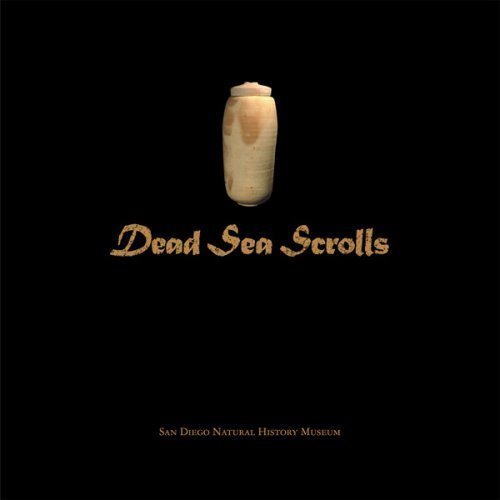
 San Diego State University Press is proud of having collaborated with the San Diego Natural History Museum to produce a catalogue that complemented the Dead Sea Scrolls exhibition in 2007. The Dead Sea Scrolls are 2,000-year-old texts that were found by Bedouin goat-herders in Israel, on the northwestern shore of the Dead Sea. In the mid 20th century, archaeologists also began digging out the ancient texts that had been left untouched in caves for many centuries. The region in which they were found, today known as Khirbet Qumran, once existed under Greco-Roman rule and was known as Judaea. The community that wrote the Dead Sea Scrolls are widely believed to have been a group that separated from more mainstream Judaism. While they did not ultimately survive under Roman rule, it is apparent that several of the ideas demonstrated in the texts have indeed survived. They were written at a time when Christianity and Judaism as we know them were in the beginning stages of their development, and the influence that they have had on the foundations of Western society can be appreciated thanks to the close research of dedicated scholars. If you missed the 2007 Dead Sea Scrolls exhibition there is no need to worry, because SDSU Press still has an informative and visually beautiful volume in store for you.
  DEAD SEA SCROLLS is laid out in such a way that allows readers to see the actual scrolls that researchers have deciphered. The categories of text that lead you through the different scripts allow one to understand their physical condition, the interpretation that has been reached on their meaning, and the content of their words via translated lines. The images of the scrolls themselves are stunning, and thanks to pointers such as the "Look at the scroll" category that explains the physical appearance and the structure of the writing in the excerpts, one can get closer to the experience of researchers themselves. It becomes all the more easy to appreciate the work that has been done on these significant archaeological finds when you see how the passage of time has worn down many of the texts written over animal skin and how this has not been enough to erase their meaning. Links of the present to the past have not been severed, but strengthened as we see how the ideas of ancient communities have formed the modern era that we are part of.
 Visit our Amazon store to get your hands on your copy of DEAD SEA SCROLLS! The three sections of the volume will give you access to scrolls from the Israel Antiquities Authority, the Department of Antiquities of Jordan, and codexes from the National Library of Russia in St.Petersburg.


