Showing posts with label History. Show all posts

Tuesday, July 26, 2016

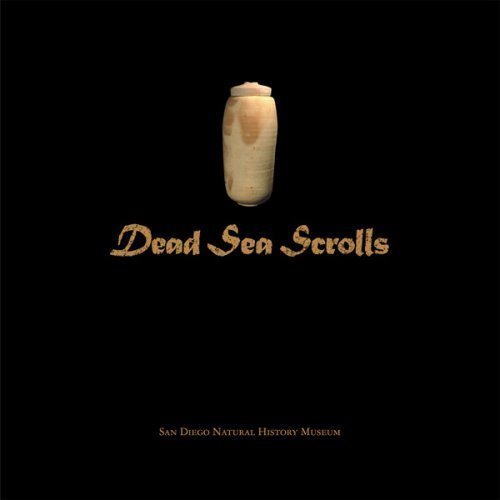
DEAD SEA SCROLLS: SDSU Press' Collaboration in the World's largest and Most Comprehensive Exhibition of the Dead Sea Scrolls

San Diego State University Press is proud of having collaborated with the San Diego Natural History Museum to produce a catalogue that complemented the Dead Sea Scrolls exhibition in 2007. The Dead Sea Scrolls are 2,000-year-old texts that were found by Bedouin goat-herders in Israel, on the northwestern shore of the Dead Sea. In the mid 20th century, archaeologists also began digging out the ancient texts that had been left untouched in caves for many centuries. The region in which they were found, today known as Khirbet Qumran, once existed under Greco-Roman rule and was known as Judaea. The community that wrote the Dead Sea Scrolls are widely believed to have been a group that separated from more mainstream Judaism. While they did not ultimately survive under Roman rule, it is apparent that several of the ideas demonstrated in the texts have indeed survived. They were written at a time when Christianity and Judaism as we know them were in the beginning stages of their development, and the influence that they have had on the foundations of Western society can be appreciated thanks to the close research of dedicated scholars. If you missed the 2007 Dead Sea Scrolls exhibition there is no need to worry, because SDSU Press still has an informative and visually beautiful volume in store for you. 


DEAD SEA SCROLLS is laid out in such a way that allows readers to see the actual scrolls that researchers have deciphered. The categories of text that lead you through the different scripts allow one to understand their physical condition, the interpretation that has been reached on their meaning, and the content of their words via translated lines. The images of the scrolls themselves are stunning, and thanks to pointers such as the "Look at the scroll" category that explains the physical appearance and the structure of the writing in the excerpts, one can get closer to the experience of researchers themselves. It becomes all the more easy to appreciate the work that has been done on these significant archaeological finds when you see how the passage of time has worn down many of the texts written over animal skin and how this has not been enough to erase their meaning. Links of the present to the past have not been severed, but strengthened as we see how the ideas of ancient communities have formed the modern era that we are part of. 

Visit our Amazon store to get your hands on your copy of DEAD SEA SCROLLS! The three sections of the volume will give you access to scrolls from the Israel Antiquities Authority, the Department of Antiquities of Jordan, and codexes from the National Library of Russia in St.Petersburg. 


Thursday, July 14, 2016

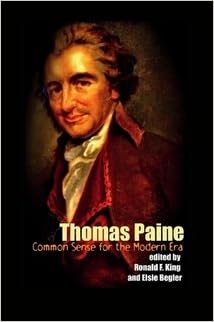
THOMAS PAINE: COMMON SENSE FOR THE MODERN ERA


In 2005 a conference titled Thomas Paine: Common Sense for the Modern Era was held at San Diego State University in what was part of an effort to begin a series of tributes to great thinkers of the early stages of America. Among these intellectuals that worked against the current and defended the ideals that theoretically define the United States as a nation today is the often underrepresented Englishman who moved to America in 1774 and quickly began advocating for independence. In 2007, a volume was published by SDSU Press that went by the same name as the conference and captured the presentations and panels that discussed Thomas Paine’s ideas, life, and legacy.

In contrast to other venerated figures of the American Revolution like John Adams, James Madison, and Alexander Hamilton, Thomas Paine believed in an American independence that would function atop newly established pillars of society. He did not simply want America to move away from British rule, but instead wanted to diverge from a British mentality of what civilization was supposed to be. Paine’s experience with British style rule both in England and in America was one in which he had extensive exposure to the deprivation of the masses through state brutality that led to poverty and heavy handed punishment that served to keep the elite in their privileged state. In his hometown of Thetford, Paine grew up watching civilians being executed in the gallows for petty crimes spurred by need rather than malice such as stealing bread. In America, inadequate representation of the majority’s interests and elitism were also present, but there was room for renewal through independence.


In 1776 Paine’s pamphlet, Common Sense, resonated strongly with the sentiments of many who lived in the British colonies.

"Common sense is the understanding that it is the people who have to have sovereignty. Thus, Paine wanted to rid America not just of British soldiers, but of the entire British system. It was a system of imperialism, of colonialism, of tyranny and slavery. He wanted to start anew, with a new system based on justice and rights, equality and reason. Give power to the people, and establish a government that ensures the adequacy of people to be what they can be. Do not merely give people rights; give them the idea of using those rights” (McCartin,71)."

Paine has been undermined in comparison to other founding fathers for a number of reasons including, as Susan Jacoby argues in her presentation, the fact that he is often portrayed as an atheist for his distrust of institutionalized religion, even though he was actually a deist. Order your copy of Thomas Paine: Common Sense for the Modern Era here and join the discussion on Thomas Paine! Break the habit of under appreciating this revolutionary thinker whose ideas and legacy are still pertinent today.   

Saturday, August 04, 2012

It’s Not Just a Sound Bite. Steinbeck’s Echo Gets Louder in "Homer from Salinas: John Steinbeck’s Enduring Voice for California" (and everyone else who’s listening)

I saw the news today. Oh boy. Apparently, depending on which of our presidential candidates you ask, the economic numbers tell different tales. (By the way, the numbers show unemployment rising from 8.2% in June to 8.3% in July). According to Mitt, ever the voice of the shrinking middle class (that voice, by the way, is coming from far above), the numbers are a “hammer blow” to the nation’s workers. And no, that’s not a cool sexual reference. If you ask our current man in the white house on the hill (also a voice coming from above…he is on a hill mind you), he states that things are getting better but “we’ve still got too many folks out there looking for work.” What is causing this, you may ask each candidate? Each one says it’s the other guy.

Thanks gents. You’ve made it perfectly clear that people are still getting screwed; it’s just a matter of lubricant. I’m impressed with both of your abilities to dilute into sound bites a problem more and more people are facing.

With election rhetoric heightening and finger pointing coming to that wonderful height of US politics known as “The other guys did it,” I can’t help but consider John Steinbeck and his oeuvre. Yes, I said it: the writer’s name that in my years of teaching high school English and university survey courses generally brought sighs of forced reverence and hidden questions of relevance. However, if you look closely at what this Californian covers, in an earnest desire to discover honesty in his words (and even some painful recognition of ethnic stereotyping and dubious characterization), what you’ll find are deep and fundamental questions of identity, ethnicity, poverty, and the exploitation of the dispossessed. You could easily flip a switch and have Steinbeck writing about our nation today.

And this kind of thoughtful consideration, this honest assessment, is exactly what you will find in Homer from Salinas: John Steinbeck’s Enduring Voice for California, deftly edited by Dr. William A. Nericcio and published by San Diego State University Press. From noted scholars, performers, artists, and photographers, this mélange of lectures, screenings, debates, discussions, and visual artifacts brings Steinbeck to the forefront of contemporary discussion. This “chaemera-like publication,” as Nericcio calls it in his introduction, compiles some of the most interesting moments from a Steinbeck celebration at San Diego State University in 2007. A celebration that took place right around the time the election season was ramping up before Obama’s first run at the office.

Questions about immigration, the economy, and the growing lower class (read impoverished, abused, taken advantage of) were all over the lips of politicians’ as much then as they are today. And in this volume of thoughtful analysis, creative response, and honest assessment, Steinbeck is given a modern day treatment that begs the question: has anything changed?

Nericcio’s collection is comprised of a beautiful mix of scholars, children’s writers, poets, and artists. The end result is an examination of the issues that plagued this nation in one of its worst economic and social times, that plagued it in 2007, and that sadly still plague it today. It proves that Steinbeck’s writings are an honest, if sometimes flawed, assessment of the “hammer blow” of “folks out there looking for work.” Echoes of this can still be heard today in the workers’ cries and the protestors’ chants, railing against the machine that’s running them over.

Homer from Salinas
is not simply a look at Steinbeck and California’s past; it is a look at the ever-changing, and troubled, United States. This is a thoughtful work that digs Steinbeck out of the dust bowl and work camps of The Great Depression and foresees him center stage in the debates of the Occupy movement and Minuteman radicalism of today’s Great Recession. It would be a welcome novelty if our political leaders could be as relevant and honest as Steinbeck and this collection.

Buy it today from SDSU Press. High school and university classrooms cannot afford to be deprived of the thoughtful debates that this collection ignites.