Showing posts with label avant-pop. Show all posts

Wednesday, November 12, 2014

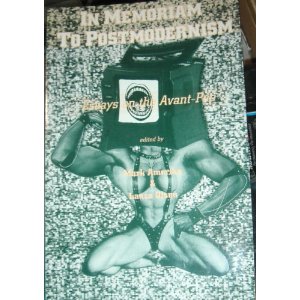
The Avant Pop Manifesto: In Memoriam to Postmodernism by Mark Amerika & Lance Olsen— Critical Essays from San Diego State University Press (SDSU Press)

Welcome to the age of technology where one should expect new forms of art to spring alive from the electric wiring. We are in the new age where both entertainment and daily life circulate around digital information. On a daily basis our brains are processing images and data from the internet, mass media, video games, movies, and everything else that our modern society has created. Due to such stimuli our society has evolved both in its art and outlook.

“Now that Postmodernism is dead and we’re in the process of finally burying it, something else is starting to take hold in the cultural imagination and I propose that we call this new phenomenon Avant-Pop” —The Avant-Pop Manifesto by Mark Amerika

The creation of Avant-Pop is proof that times are changing, and with it art. Focusing on what can be created with the new inspirations of today. What exists (mass media, internet) now and has never been able to be an influence to artists until now.


As Mark Amerika asks in his manifesto, “[w]ho are we sharing the cultural toilet with” and “what are we filling it with?” What are individuals and artists alike contributing to our society. The trash of the past is discarded and in its stead it’s filled with the movements of our generation, only to repeat the cycle with each new generation.  

To learn more of the Avant-Pop phenomenon taking hold in our modern age check out In Memoriam to Postmodernism.

One rather new avant garde expression, or as Mark would say avant pop, is the music called dubstep. Sounds taken from a wide variety of sources, mixed and reproduced to create new sounds.

Check out the video Is Dubstep Avant Garde Musical Genius on Youtube for a short 6min lecture for more.

Monday, November 03, 2014

The Avant Garde in Attitude: Fluxus The History of an Attitude by Owen Smith—Aesthetic Critical Theory from San Diego State University Press (SDSU Press)

What breaks against the mold of convention, society and traditional cookie cutter art, literature, film, and media? Fluxus the History of an Attitude. The book that shows how new avant grande movement has begun to develop and expand. The evolution making way to allow for new abilities of thought and expression while continually moving away from conventional thought, mainstream ideology, and break from the bonds of conformity that has long limited true freedom of expression.

Medias such as paint, clay, ink and canvas are stripped away by fluxus. Instead, deciding to use what is left over by the community, the trash and carbon footprints transform into art. This helps build an individuality without relying on companies to create mediums and tools for production of expression, taking away the chains that suggest their route of creativity.

Fluxus is a form which the group has described as “non-art” since they do not wish to be associated with the same constraints as traditional artists who follow rules, ready to please the masses and unable to think outside the box.

It takes an open mind to be able to find art in all things, especially ones that are new and test your ability to look for beauty in things you originally had never noticed due to their “traditional” uses. Such examples include furniture, office supplies, electronics, and other things that help your day run smoothly, things that are easily bought and discarded.

“Fluxus [is] serious about not being serious” (242)

Being serious is by society standards, not the fluxus standard. One can be serious about their art but not be serious about what society wants them to do with art or create with their talent.

Fluxus in 2014 has evolved, as intended. Art being one of the largest mediums for thought and the new fluxis kit's which are sold by artists, each kit is different and can be manipulated. Read Thing/Thought Fluxus Edition to see examples of the "kit".

One art show in 2014 at the Rush Auditorium at Florida Southwestern State College gave a fluxus show with improve opera, spoken word poetry, and for the finale a whipped creamed blow up alligator topped with cherries and nuts which the audience was allowed to partake a piece of the art with a chip. Read the full article here.

Fluxus has continued to invade society with its unique form of individual art, ideas and media. To take a closer look at fluxus check out the full critique and essays by following this link.


Friday, August 17, 2012

Is It All Over Now? "In Memoriam To Postmodernism: Essays on the Avant-Pop"

Postmodernism is dead. Or so say Avant-Popists. Or so said Avant-Popists close to twenty years ago. So, looking at it today, has Avant-Pop deflated and died as well? Or has it exploded, continuing to combat the fractured yet ironically monolithic technological medium that has us updating Facebook with pictures for our status, while Tweeting about our innermost superficial thoughts, on our way to buy an organic muffin trucked in from out of town, to be washed down with a strong cup of fair-trade coffee from caffeine giant Starbucks, before we head into the nearest stadium-style theater to watch the latest reboot of a multi-million dollar movie franchise based on a TV character made popular in the eighties from a comic book first published in the sixties?

Mark Amerika and Lance Olsen’s In Memoriam to Postmodernism: Essays on the Avant-Pop asked questions in 1995 that we just might be able to answer today. A collection of definitions, essays, and musings, ending with manifestos for the movement, In Memoriam’s organization serves to first explain the measuring tape and then present us with what is to be measured, allowing the reader to move fluidly from the issues of the early nineties to a consideration of what they mean today.

Amerika and Olsen begin the collection with a nod to the neophyte, a slow roll into the twists, turns, and dark alleys of Avant-Pop. Most appealing, and amusing, is the “Avant-Pop Quiz” and “Click Here for More Information” sections, where in the former the editors attempt to frame that which refuses to be hung, while providing a catch-all reading list in the latter.

After the introduction, velocity picks up and celebrated Avant-Pop writers and theorists take over. The table of contents is a media-drunk cavalcade marching in to tear the house down, including such notable names as SDSU’s Larry McCaffery, Harry Polkinhorn, and a wonderfully salacious piece of trans-media “Zipper-Bustin’ ” by Harold Jaffe; the revered (or Avant-Pop Reverend?) Ronald Sukenick; Eurudice; award-winning Japanese scholar Takayuki Tatsumi; and “[a manifesto of sorts]” by “major influence on the avant-set” Raymond Federman.

In Memorium to Postmodernism runs the gamut of topics: Curtis White examines cultural politics, Brooks Landon looks at the hypertextual novel and the future of publishing, Martin Schecter discusses generational divides (an issue swirling around the entire collection and even more poignant in 2012), David Blair dives into film and virtual worlds, and Michael Joyce scrutinizes the tenuous relationship between reading and meaning. A particularly favorite piece from the collection is Steven Shaviro’s “Strategies of Disappearance: or Why I Love Dean Martin.” And damnit, now I love Dino too. So will you. 

Lance Olsen brings the collection to a close, and puts forth a challenge to today’s readers, by forcing us to look at the “Alzheimer’s province in the United States of Amnesia…a pioneer consciousness that doesn’t like to look over its shoulder, check out the rearview mirror, environmentally, militarily, culturally, because objects back there are always larger than they appear.”

In the living age of hypertexts, the death of publishing, “Reality” T.V., YouTube, mash-ups (one of the new words now featured in the updated Merriam-Webster Collegiate Dictionary), instantaneous American Idol voting, CNN’s reporters on the street, and political revolutions sparked by social media, Yeats’ beast is no longer slouching towards Bethlehem to be born. It’s already here and indulging itself at the Hyperconsumer Capitalist party (thanks for the image McCaffery…I’m officially frightened fecal-less).

In 1995, In Memoriam to Postmodernism: Essays on the Avant-Pop asked if we were ready to face the technologically fueled cultural Armageddon coming at us. With relationships between writer and reader, consumer and producer shifting and reversing so quickly we can’t tell who is who anymore, it’s time to look back at these questions so we can start answering them. That is, if we’ve got the stones to do it.


MORE CONTEMPORARY LEAPS INTO AVANT-POP?


This isn't just an essay...
it’s a clinic and a reading list from Jonathan Lethem


Self-proclaimed epiphany addict and techno optimist Jason Silva...
on topics that would get Timothy Leary high

Wednesday, January 11, 2012

aVANT-pOP: Weakening the Ideologies that Keep the People Calm.

 "The emerging wave of Avant-Pop artists now arriving on the scene find themselves caught in this struggle to rapidly transform our sick, commodity-infested workaday culture into a more sensual, trippy, exotic and networked experience."
-Mark Amerika & Lance Olsen

In Memoriam to Postmodernism: Essays on the Avant-Pop is a collection of works by some of the main proponents of the Avant-Pop literary art movement. If you need another reason to fuel your passion for the protection and freedom of the internet, this collection will give you a real good one.


Avant-Pop recognizes the popular media for what it is: a vile monster of distracting misinformation and zombifying"entertainment" that holds a tenacious grip on the minds of a majority of people, insidiously defining them from without and diverting their attention from more important things like the revocation of their rights and freedoms. The Avant-Pop artist believes it's too late to fight against it, so he or she gears up for a journey into the heart of the beast in an attempt to change it from within.

Ron Sukenick writes it best in his essay aVANT-pOP, sUR-fICTION, hYPER-fICTION:

"...actually what we have here is a reversal of the old consumerist tactic of 'co-optation' -i.e., if some rebel-rousing movement comes along, defang it, package it and sell it, absorb it into the mass market, render it harmless -Avant-Pop, on the other hand, co-opts mass-market schlock, twists it and tortures it till it becomes dangerous and injects it back into the market as a virus that destroys its host from within...where monolithic mass market was, many mini-markets there shall be, making clear the difference between consumerism's 'free market,' and a democratic market which offers the consumer a wide spectrum of choice." 
That "spectrum of choice" may become much more difficult or impossible to offer if Congress passes SOPA. It would limit the people's choices even further, decreasing their amplitude of vision and insight by serving up only the few narrow options provided by popular media.

Avant-Pop wants to widen and enrich our options, encourage individuality, and support the sharing of our ideas and art.

To learn more about Avant-Pop and get inspired to create art that keeps communication open purchase a copy of In Memoriam to Postmodernism: Essays on the Avant-Pop from SDSU Press.

Also, check out the editors Mark Amerika and Lance Olsen.
And to learn more about the Stop Online Piracy Act click here


Monday, March 08, 2010

In Memoriam to Postmodernism: Essays on the Avant-Pop | Also, an Etiquette Question to be Answered by You, Gentle Reader

Yes, it's true. Postmodernism, or "pomo" to its friends, passed away. Avant-pop killed it, ravaged its corpse, devoured its innards, slurped up its philosophy and tossed it on a funeral pyre. Sadness.

My question is this: just what sort of condolences does one send to a deceased school of thought? A card? A muffin basket? Is it crass to just send cash?

Emily Post has no answer, nor do Mark America and Lance Olsen in their compelling book, In Memorian to Postmodernism: Essays on the Avant-Pop.


Still, don't let its appalling lack of a "Guide to Manners" section deter you from checking out this slick book. It's, honest to [insert your deity here], one of the most fascinating essay collections I've ever come across.

Not sure what Avant-Pop is? Don't worry, our own Larry McCaffrey (Professor Emeritus of San Diego State's Department of English and Comparative Literature) will help you out with his essay, "13 Introductory Ways of Looking at a Post-Post-Modernist Aesthetic Phenomenon Called 'Avant-Pop.'"

Other gems in this book include: a fantastic essay by Harry Polkinhorn (Director of this very press) entitled "Avant-Pop at the Border," Steven Shaviro's "Strategies of Disappearance: or Why I Love Dean Martin," and from the incomparable Raymond Federman, "AVANT-POP: YOU'RE KIDDING! or THE REAL BEGINS WHERE THE SPECTACLE ENDS [a manifesto of sorts]." This book rocks. So buy it here!

Shaviro recently invaded the Reality Hackers seminars at Trinity University--more info here.