Click the book for a direct link or here.
Monday, November 06, 2017
A Classic Critical Anthology on John Steinbeck, Focused on the Nobel Prize Winner and his Home, California #steinbeck
Click the book for a direct link or here.
Wednesday, August 30, 2017
WORKING THE STONE by Paul Metcalf and Lucia Saradoff from San Diego State University Press #newenglandhistory #massachusettshistory #mininghistory #mines
If you recognized either of these men, it was probably the one on the right, American novelist Herman Melville, author of Moby-Dick. But who's the other guy, you ask? His name is Paul Metcalf, Melville's great-grandson, and one of the authors of Working the Stone, a special SDSU Press volume published back in 2004--the author passed away in 1999. While they never actually met or had any contact, Melville died years before Metcalf was even born, their shared ancestry has had much influence on Metcalf's writings. Metcalf, in an interview, acknowledges American poets such as Pound and Williams as having been great influences on his writing career, traits plainly in evidence in the experimental style of Working the Stone. {Online you can find a cool interview here where Metcalf talks about his writings and influences, as well as his connection to and inheritance from great-grandfather Herman Melville, the protagonist of Genoa, one of Metcalf's other novels}
Let's get back to the real reason we're here; Paul Metcalf and Lucia Saradoff's Working the Stone: The Natural, Social, and Industrial History of the Village of Farnams, Town of Cheshire, County of Berkshire, Commonwealth of Massachusetts. Metcalf and Saradoff take us on a visual and literary journey through the history of a town in New England called Farnams, home of a once booming and successful limestone quarry. The compilation of narratives and oral histories of the laborers who recall their experiences of working in the quarry, including the development of machinery that eventually replaced the need for the workers, not only gives us insight into life in Farnams, but of American life as a laborer as a whole. Metcalf and Saradoff also incorporate the geography and geology of the area into the text dating back hundreds of millions of years, through which we see how it was formed and learn about major events in American history that took place in Farnams or impacted its development, such as it having served as a place of refuge for runaway slaves traveling along the Underground Railroad, as well as the impact the Civil War had on the development of the quarry.
While factual evidence runs throughout the text, it is far from being the conventional fact-based historical documentation we are so used to. Rather, Metcalf and Saradoff play with the presentation of their collection of information and factual evidence, establishing a poetic, collective, visual, and thus beautiful voice that speaks the living history of Farnams. Here's a glimpse of the front cover design of Working the Stone by Guillermo Nericcio GarcĂa featuring a period photo of the mines in Massachuesetts.

original posting: 2/19/11
revised repost: 8/20/17
Friday, December 16, 2016
Latinx Comic Book Storytelling: An Odyssey by Interview
The “eminent scholar of all
things Latino,” Frederick Luis Aldama once again takes us into the world of
Latinx comics with his new text Latinx
Comic Book Storytelling: An Odyssey by Interview (9). In an intriguing and
exciting collection of interviews spanning from Lalo Alcaraz and “La Cucaracha,” to Jamie Hernandez of Love & Rockets fame, to Cristy C.
Road and Spit and Passion, Aldama’s
compendium of experiences brings into focus the diversity of the Latinx comic
tradition, one that runs the gamut from superheroes to political commentary to
queer memoirs.
Aldama focuses specifically on the nature
by which the authors find themselves participating in the creation of comics
and to what effect their cultures influence them. It provides
valuable insight into the minds that are currently constructing the Latinx
comic tradition, a
perspective necessary as the Latinx population is an ever-present one in the
comic book market.
That being said, Aldama’s Latinx Comic Book Storytelling: An Odyssey
by Interview is an insightful and entertaining experience for readers
of all walks. It enlightens them to the writing process and history of many of
their favorite comics while simultaneously providing an interesting cultural
study in regards to the growing prominence of Latinx contributors to the comic
medium. Aldama’s text directly addresses
the question of Latinx representation within the genre. As such, it
provides an answer: “The time for waiting is over. Comics by and about Latinos
are here to stay. The authors and artists featured in this book are living
proof” (269). Thursday, October 20, 2016
Trilingual Education Gets a New Look!
This SDSU Press gem gets an updated cover. The content you find inside is the same great guide into Sign Language, Spanish, and English.
The book translates American Sign Language into both English and Spanish. This way Spanish Speakers in the United States can communicate with deaf individuals.
Trilingual Education bridges the gaps of communication. It also assists to meet the linguistic needs that these individuals need.
Thursday, September 15, 2016
pacificREVIEW 2016: Lurking Anonymity
You can purchase your copy of pacificREVIEW Lurking Anonymity on October 1st through SDSU Press.
In the meantime if you'd like to contribute to pacificREVIEW, a West Coast Arts Annual visit the contributor's page for information on how to support the journal and special discounts.
Thursday, September 01, 2016
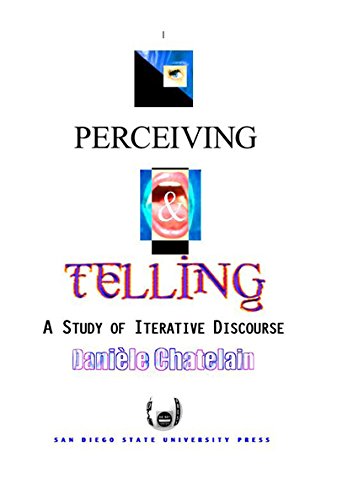
A Guide to Understanding Complex Narratives: Daniele Chatelain "Perceiving and Telling: A Study of Iterative Discourse"
Repetition. In any narrative structure the function of repetition as a literary device serves more than just a superficial way of attaching meaning to an object or character. Authors employ these devices to expand significance and implore the reader to actively assign connections in the narrative. Daniele Chatelain breaks down this idea of repetition within narrative structures in her book “Perceiving and Telling: A Study of Iterative Discourse” and ultimately outlines a way of recognizing these “four dimensional” (187) environments working within stories. Chatelain explains that utilizing iterative discourse in other areas of interpretation (such as narrative structure, character development, story themes, etc.) can render a seemingly one dimensional text into a multi-faceted piece which questions the idea of space and time. Ultimately Chatelain produces a unique discourse in her book by challenging the traditional narrative functions of tired literary analyzation and brings her readers into awareness of their textual surroundings.
Daniel Chatelain’s Perceiving and Telling: A Study of Iterative Discourse can be purchased through SDSU Press.
Thursday, July 28, 2016
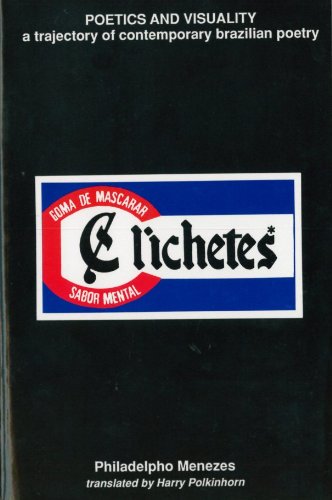
POETICS AND VISUALITY: A Trajectory of Contemporary Brazilian Poetry
An in-depth study by Philadelpho Menezes, professor of Semiotics and Communication at the Pontifical Catholic University of SĂŁo Paulo, on the evolvement of experimental poetry in Brazil is a worthy read for poetry lovers. Take advantage of the fact that it has been translated into English by Harry Polkinhorn, currently an editor for SDSU Press, and order a copy today!
POETICS AND VISUALITY: A TRAJECTORY OF CONTEMPORARY BRAZILIAN POETRY is a survey how visuality was incorporated into and formed experimental Brazilian poetry throughout the course of 40 years from an insider's understanding. Part I examines the spatialization of the verse and the concretism that followed in the 1950s. He takes readers through a close look at three versions of concretism: Noigandres, Dias-Pino, and neo-concretism.
Concretism was an attempt to break away from a tradition of verbal expression to begin exploring communication that tapped more into the verbal senses. The differences between the versions of concretism were mostly based on how they perceived space in a poem. In the Noigandres vein, words were arranged geometrically and there was no linear syntax. Dias-Pino concretism prioritized symmetry and mathematics, and neo-concretism was a fusion of the previous two that created an active experience for spectators that was meant to go beyond contemplation and that formed meaning based on the spectator instead of the signs and their positioning according to the poet's taste.
The following sections of POETICS AND VISUALITY look at subsequent movements that expanded the ideas of concretism. Part II is a study of the wordless poetry of the 1960s, and Part III is one on visual poetry. Menezes classifies visual poetry as collage poetry, package poetry, and montage poetry. The creation of such poetry during Brazil's repressive military dictatorship that lasted from 1964 to 1985 was an additional factor that influenced the development of the country's experimental poetry. The social function of art as a critique of the status quo came through in a movement that in itself was inherently a statement against conventional modes of expression.
Particularly in the last sections of the book, Menezes provides examples of poems that fit into his analysis and he goes into detail about the construction, meaning, and tradition from which each poem stems. POETICS AND VISUALITY, another goodie from SDSU Press, has the perfect combination of direct examples, theory, and chronological organization that can lead readers to appreciate experimental poetry in Brazil and its impact on the international poetry scene.
POETICS AND VISUALITY: A TRAJECTORY OF CONTEMPORARY BRAZILIAN POETRY is a survey how visuality was incorporated into and formed experimental Brazilian poetry throughout the course of 40 years from an insider's understanding. Part I examines the spatialization of the verse and the concretism that followed in the 1950s. He takes readers through a close look at three versions of concretism: Noigandres, Dias-Pino, and neo-concretism.
![]() |
| "ruasol" by Ronaldo Azeredo, 1957 |
The following sections of POETICS AND VISUALITY look at subsequent movements that expanded the ideas of concretism. Part II is a study of the wordless poetry of the 1960s, and Part III is one on visual poetry. Menezes classifies visual poetry as collage poetry, package poetry, and montage poetry. The creation of such poetry during Brazil's repressive military dictatorship that lasted from 1964 to 1985 was an additional factor that influenced the development of the country's experimental poetry. The social function of art as a critique of the status quo came through in a movement that in itself was inherently a statement against conventional modes of expression.
![]() |
| "Sick transit" by José Paulo Paes, 1973 |
Particularly in the last sections of the book, Menezes provides examples of poems that fit into his analysis and he goes into detail about the construction, meaning, and tradition from which each poem stems. POETICS AND VISUALITY, another goodie from SDSU Press, has the perfect combination of direct examples, theory, and chronological organization that can lead readers to appreciate experimental poetry in Brazil and its impact on the international poetry scene.
Tuesday, July 26, 2016
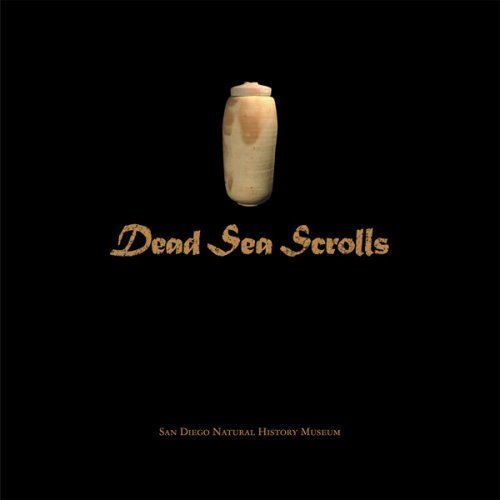
DEAD SEA SCROLLS: SDSU Press' Collaboration in the World's largest and Most Comprehensive Exhibition of the Dead Sea Scrolls
San Diego State University Press is proud of having collaborated with the San Diego Natural History Museum to produce a catalogue that complemented the Dead Sea Scrolls exhibition in 2007. The Dead Sea Scrolls are 2,000-year-old texts that were found by Bedouin goat-herders in Israel, on the northwestern shore of the Dead Sea. In the mid 20th century, archaeologists also began digging out the ancient texts that had been left untouched in caves for many centuries. The region in which they were found, today known as Khirbet Qumran, once existed under Greco-Roman rule and was known as Judaea. The community that wrote the Dead Sea Scrolls are widely believed to have been a group that separated from more mainstream Judaism. While they did not ultimately survive under Roman rule, it is apparent that several of the ideas demonstrated in the texts have indeed survived. They were written at a time when Christianity and Judaism as we know them were in the beginning stages of their development, and the influence that they have had on the foundations of Western society can be appreciated thanks to the close research of dedicated scholars. If you missed the 2007 Dead Sea Scrolls exhibition there is no need to worry, because SDSU Press still has an informative and visually beautiful volume in store for you.
DEAD SEA SCROLLS is laid out in such a way that allows readers to see the actual scrolls that researchers have deciphered. The categories of text that lead you through the different scripts allow one to understand their physical condition, the interpretation that has been reached on their meaning, and the content of their words via translated lines. The images of the scrolls themselves are stunning, and thanks to pointers such as the "Look at the scroll" category that explains the physical appearance and the structure of the writing in the excerpts, one can get closer to the experience of researchers themselves. It becomes all the more easy to appreciate the work that has been done on these significant archaeological finds when you see how the passage of time has worn down many of the texts written over animal skin and how this has not been enough to erase their meaning. Links of the present to the past have not been severed, but strengthened as we see how the ideas of ancient communities have formed the modern era that we are part of. Visit our Amazon store to get your hands on your copy of DEAD SEA SCROLLS! The three sections of the volume will give you access to scrolls from the Israel Antiquities Authority, the Department of Antiquities of Jordan, and codexes from the National Library of Russia in St.Petersburg.
Friday, July 22, 2016
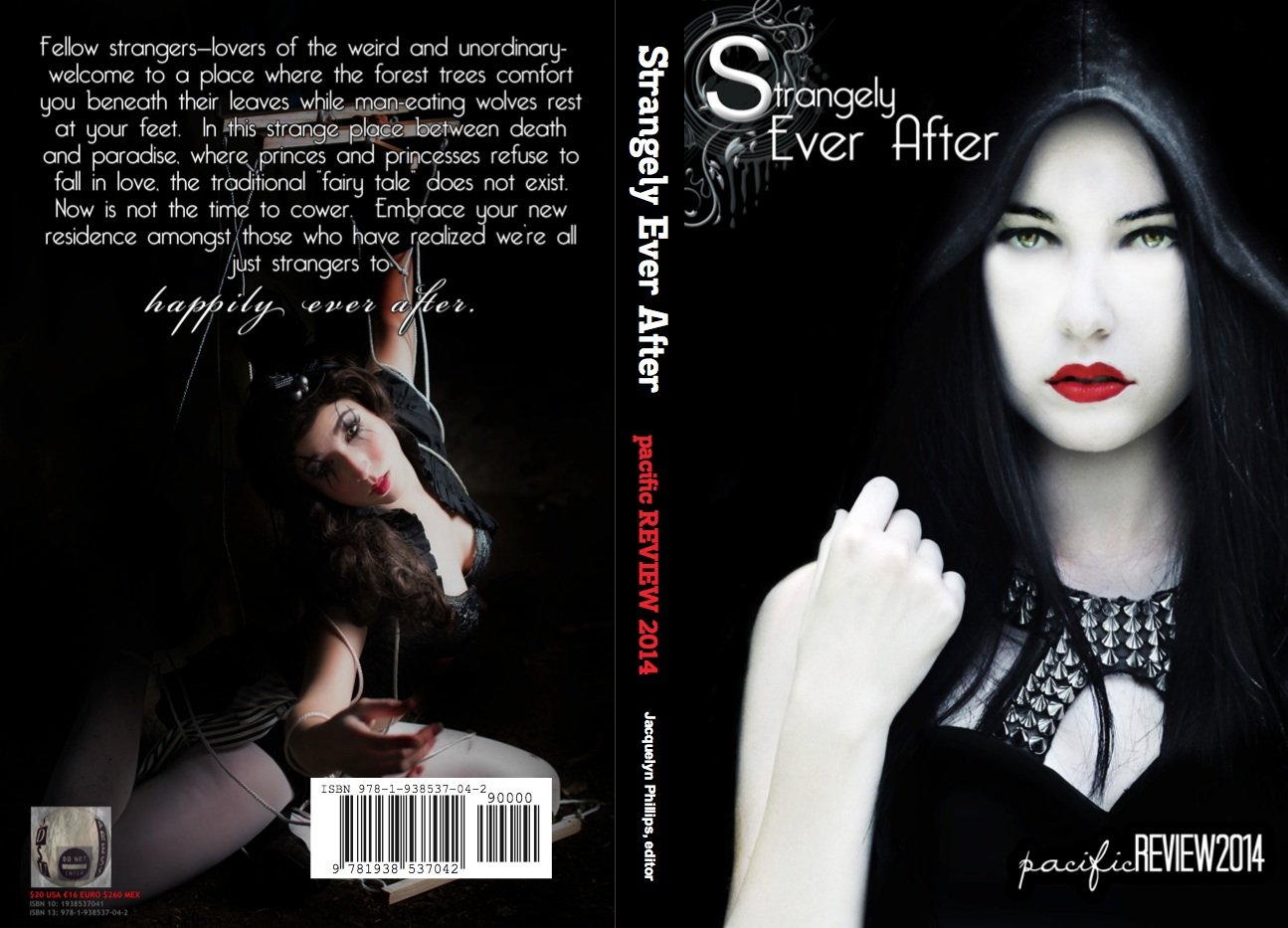
STRANGELY EVER AFTER: pacificREVIEW, A West Coast Arts Review Annual
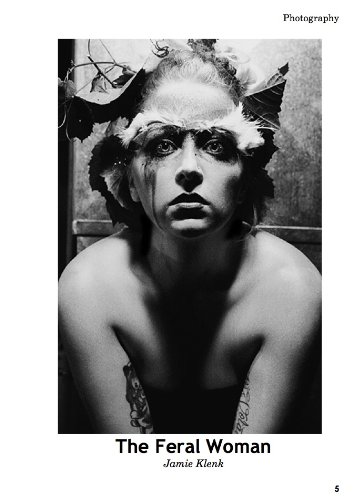
Looking for a read that will take you back to your childhood days of listening to fairy tales and reading fantasy series on long summer days? In SDSU Press fashion, Strangely Ever After, the 2014 pacificReview journal, puts forth a selection of short stories and poems that play with more traditional forms of fairy tales, ghost stories, and everything in between. Think Franz Kafka, Edgar Allen Poe, and the Little Red Riding Hood all in one big melting pot of poetry, photography, and fiction.
The authors featured in the journal write literature that twists the fantasy genre with elements like humorous undertones, questionable morals, and the denial of a happily ever after. Among the creatures and characters that you will encounter in the 2014 edition of pacificReview are victims that transform into the monsters that victimized them, malevolent spirits thirsty for revenge, frustrated demons, strangers who bond over their attraction to the unappealing, deceptive faeries, and clueless teenagers. Contributing artists include Jamie Klenk, Gale Acuff, Diane de Anda, Jane Beal, Lisa Beebe, A.J. Benenati, and Chrystal Berche, among other talented writers and photographers. Strangely Ever After is edited by Jacquelyn Phillips, Samantha Richardson, Shannon Snyder, Melissa Hill, and Dakota Lenz.

Once you get your copy of Strangely Ever After sit back, listen to a mood setting lullaby by The Cure, and enjoy the strange and thrilling ride.
You can also look forward to our upcoming 2016 publication of pacificReview, an annual SDSU Press journal. This year's theme, LURKING ANONYMITY, will gather interpretations of our relation to technology in terms of reliance and behavior and what it indicates about our humanity.
Thursday, July 21, 2016
Line of Fire: Detective Stories from the Mexican Border
The compilation of detective stories from SDSU Press’ Baja California Literature in Translation publication series, Line of Fire: Detective Stories from the Mexican Border, features non-orthodox takes on a genre that has been popular in the Latin American literary tradition. Names like Jorge Luis Borges and Roberto Bolaño have been celebrated as important figures that have paved the way for the detective novel, and as the genre continues to develop, SDSU Press has captured short detective stories taking place in Baja California and its surrounding areas. The stories that form part of Line of Fire were originally published in Spanish in En la lĂnea de fuego: Relatos policiacos de frontera and are written by Gabriel Trujillo Muñoz, HĂ©ctor Daniel GĂłmez Nieves, Leobardo Saravia Quiroz, Edgar GĂłmez Castellanos, JosĂ© Manuel Di Bella, Carlos MartĂn GutiĂ©rrez , Federico Campbell, Harry Polkinhorn, and Sergio GĂłmez Montero.
The English version of these stories, published by SDSU Press and edited by Leobardo Saravia Quiroz, whose own story is also included in the book, has opened the door of accessibility to a greater audience. Saravia Quiroz comments on the divergence from more conventional forms of the detective story that is clear in Line of Fire, “An indifference towards reason and justice prevails: the entirely modern ‘banality of evil.’ This is one difference from the conventions of the genre.” With the introduction setting the way and the “banality of evil” present in the stories that follow, the reading experience of Line of Fire will have you stepping into worlds of confusion, mystery, and unsolved endings set in the border regions of the US and Mexico. Filled with thoughts and images of paranoia, longing, belonging, betrayal, sounds of music and of bullets, you are bound to become immersed in the Mexican borders portrayed in each story that forms Line of Fire.
Order your copy today! Click here to be directed to our amazon store.
Thursday, July 14, 2016
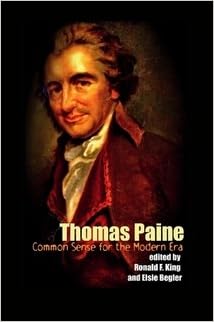
THOMAS PAINE: COMMON SENSE FOR THE MODERN ERA
In 2005 a conference titled Thomas Paine: Common Sense for the Modern Era was held at San Diego State University in what was part of an effort to begin a series of tributes to great thinkers of the early stages of America. Among these intellectuals that worked against the current and defended the ideals that theoretically define the United States as a nation today is the often underrepresented Englishman who moved to America in 1774 and quickly began advocating for independence. In 2007, a volume was published by SDSU Press that went by the same name as the conference and captured the presentations and panels that discussed Thomas Paine’s ideas, life, and legacy. In contrast to other venerated figures of the American Revolution like John Adams, James Madison, and Alexander Hamilton, Thomas Paine believed in an American independence that would function atop newly established pillars of society. He did not simply want America to move away from British rule, but instead wanted to diverge from a British mentality of what civilization was supposed to be. Paine’s experience with British style rule both in England and in America was one in which he had extensive exposure to the deprivation of the masses through state brutality that led to poverty and heavy handed punishment that served to keep the elite in their privileged state. In his hometown of Thetford, Paine grew up watching civilians being executed in the gallows for petty crimes spurred by need rather than malice such as stealing bread. In America, inadequate representation of the majority’s interests and elitism were also present, but there was room for renewal through independence.
In 1776 Paine’s pamphlet, Common Sense, resonated strongly with the sentiments of many who lived in the British colonies.
"Common sense is the understanding that it is the people who have to have sovereignty. Thus, Paine wanted to rid America not just of British soldiers, but of the entire British system. It was a system of imperialism, of colonialism, of tyranny and slavery. He wanted to start anew, with a new system based on justice and rights, equality and reason. Give power to the people, and establish a government that ensures the adequacy of people to be what they can be. Do not merely give people rights; give them the idea of using those rights” (McCartin,71)."
Wednesday, July 06, 2016
THE FLESH-AND-BLOOD AESTHETICS OF ALEJANDRO MORALES: DISEASE, SEX, AND FIGURATION: A Guide by Marc GarcĂa-MartĂnez to the Layers of Meanings in Moralesian Tales of Flesh and Blood
Dr. Marc GarcĂa-MartĂnez provides a detailed look at how Chicano writer Alejandro Morales incorporates intense imagery into his works. The Flesh-And-Blood Aesthetics of Alejandro Morales: Sex, Disease, and Figuration examines how the treatment of character’s bodies through the use of powerful literary tools functions to comment on the core of human nature and the society shaped by it. Vivid descriptions of sexual behavior and acts, of disease and bodily decomposition, and of death are characteristic of Morales’ striking style.
A seemingly contradictory dynamic of a discomfort that does not repudiate but rather encourages an interest in reading further into Morales' shocking imagery exists, and it defines a reading experience that parallels the very themes that are presented in works like The Rag Doll Plagues and The Brick People. Uncomfortable meanings begin to emerge through uncomfortable mediums and makes the realities that Morales sees more decipherable.

The Flesh-and-Blood Aesthetics of Alejandro Morales, a detailed and groundbreaking interpretation of the literature of Alejandro Morales, can be found here. Get your copy today!
Tuesday, June 28, 2016
UTOPIA 2016: A Year of Imagination and Possibility + The Utopian Vision: Seven Essays on the Quincentennial of Sir Thomas Moore
In an exploration of the human imagination and society, Thomas More’s Utopia allowed for a world that embodies a perfect and ideal society. Now, 500 years later, the British Library is celebrating the anniversary of the innovative novel through “A Year of Imagination and Possibility” at Somerset House in London through fashion, literature, theater, and other forms of art.
The concept of a utopian society has been explored by many and can be seen through different theories and perspectives. E.D.S. Sullivan compiled more than 500 works on utopia in The Utopian Vision, a collection of contemporary literature that can be read and understood by anyone who seeks to explore utopian ideals.
A calendar of The Year of Imagination is available at the Somerset House
EL PUNTO CIEGO, Visual Poetry from Argentina
| Alberto Hidalgo. Jaqueca, 1923 |
EL PUNTO CIEGO / THE BLIND SPOT—Argentina's visual poetry revealed.
EL PUNTO CIEGO is a collection of poems from Argentina covering poets and artists from the 1920s to present. These are not just poems written in Spanish—they are visual poems. They transcend language and the restrictions of textual poetry. You don’t need to know Spanish to appreciate this book. Poetry is no longer restricted by language.
![]() |
| Oliverio Girondo. Espantapárajos, 1932 |
EL PUNTO CIEGO has some of the most important Argentinian poets and artists of the last century while covering various genres. This anthology contains both styles of poetry: textual and visual. It is a beautiful collection of visual poetry from Argentina that has been in the the blind spot of the eye. The poets and artists are breaking barriers of communication. Their work can reach people of all languages. Because visual poetry breaks the langauge barrier, it is important to put the work from these artists in the forefront of art and literature.
EL PUNTO CIEGO includes work from Alberto Hidalgo, Oliverio Girondo, Xul Solar, Carmelo Arden Quin, Alejandro Sirio, Alberto Greco, León Ferrari and Mirtha Dermisache, Edgardo ANtonio Vigo, Luis Pazos and Juan Carlos Romero, Marie Orensanz, Susana Fernández Sachaos, Ivana Martinez Vollaro, Luis Felipe Noé, plus many more.
There are two editions to this Anthology of visual poetry.
THE SPECIAL EDITION

AND THE REGULAR EDITION.
Subscribe to:
Posts (Atom)