Saturday, August 04, 2012

It’s Not Just a Sound Bite. Steinbeck’s Echo Gets Louder in "Homer from Salinas: John Steinbeck’s Enduring Voice for California" (and everyone else who’s listening)

I saw the news today. Oh boy. Apparently, depending on which of our presidential candidates you ask, the economic numbers tell different tales. (By the way, the numbers show unemployment rising from 8.2% in June to 8.3% in July). According to Mitt, ever the voice of the shrinking middle class (that voice, by the way, is coming from far above), the numbers are a “hammer blow” to the nation’s workers. And no, that’s not a cool sexual reference. If you ask our current man in the white house on the hill (also a voice coming from above…he is on a hill mind you), he states that things are getting better but “we’ve still got too many folks out there looking for work.” What is causing this, you may ask each candidate? Each one says it’s the other guy.

Thanks gents. You’ve made it perfectly clear that people are still getting screwed; it’s just a matter of lubricant. I’m impressed with both of your abilities to dilute into sound bites a problem more and more people are facing.

With election rhetoric heightening and finger pointing coming to that wonderful height of US politics known as “The other guys did it,” I can’t help but consider John Steinbeck and his oeuvre. Yes, I said it: the writer’s name that in my years of teaching high school English and university survey courses generally brought sighs of forced reverence and hidden questions of relevance. However, if you look closely at what this Californian covers, in an earnest desire to discover honesty in his words (and even some painful recognition of ethnic stereotyping and dubious characterization), what you’ll find are deep and fundamental questions of identity, ethnicity, poverty, and the exploitation of the dispossessed. You could easily flip a switch and have Steinbeck writing about our nation today.

And this kind of thoughtful consideration, this honest assessment, is exactly what you will find in Homer from Salinas: John Steinbeck’s Enduring Voice for California, deftly edited by Dr. William A. Nericcio and published by San Diego State University Press. From noted scholars, performers, artists, and photographers, this mélange of lectures, screenings, debates, discussions, and visual artifacts brings Steinbeck to the forefront of contemporary discussion. This “chaemera-like publication,” as Nericcio calls it in his introduction, compiles some of the most interesting moments from a Steinbeck celebration at San Diego State University in 2007. A celebration that took place right around the time the election season was ramping up before Obama’s first run at the office.

Questions about immigration, the economy, and the growing lower class (read impoverished, abused, taken advantage of) were all over the lips of politicians’ as much then as they are today. And in this volume of thoughtful analysis, creative response, and honest assessment, Steinbeck is given a modern day treatment that begs the question: has anything changed?

Nericcio’s collection is comprised of a beautiful mix of scholars, children’s writers, poets, and artists. The end result is an examination of the issues that plagued this nation in one of its worst economic and social times, that plagued it in 2007, and that sadly still plague it today. It proves that Steinbeck’s writings are an honest, if sometimes flawed, assessment of the “hammer blow” of “folks out there looking for work.” Echoes of this can still be heard today in the workers’ cries and the protestors’ chants, railing against the machine that’s running them over.

Homer from Salinas
is not simply a look at Steinbeck and California’s past; it is a look at the ever-changing, and troubled, United States. This is a thoughtful work that digs Steinbeck out of the dust bowl and work camps of The Great Depression and foresees him center stage in the debates of the Occupy movement and Minuteman radicalism of today’s Great Recession. It would be a welcome novelty if our political leaders could be as relevant and honest as Steinbeck and this collection.

Buy it today from SDSU Press. High school and university classrooms cannot afford to be deprived of the thoughtful debates that this collection ignites.

Thursday, August 02, 2012

Get Inspired by Catherine Yi-yu Cho Woo's book, "Luster of Jade: Poetry, Painting, and Music"


Born in the capital of China, Catherine Yi-yu Cho Woo is an artist that has reached  
international success. Dr. Woo has excelled as a poet, painter, composer, teacher, and scholar. With numerous awards, nine books and a teaching position at San Diego State University, one of her poems was turned into a song that became a number one hit in Taiwan. Due to her breathtaking representations of nature, and soul she was asked by President Bush to serve on the National Council for the Arts in 1991.

San Diego State University Press has captured some of Dr. Woo’s talent in this 1992 publication, “Luster of Jade: Poetry, Painting, and Music.” Dr. Woo’s poetry has a signature feature, as her strategic use of space is as unique as her word choice. Although Dr. Woo has reached international fame, her poetry still explores elements of human behavior that is easy to relate to, as her poem Memories goes:


Memories
                  Old
                        Faded
                                    Yellow
                                                Memories
A smile
            A touch
                        A whisper
                                          Of
                                              Yesteryear
                                                            Faraway
In the Background
                                Yet never gone
They were thrown away
                                    Yet they stayed
They are ours


This compilation of Dr. Woo's talent is not confined to poetry, but also includes her artwork. Paintings which have been described as, "visual poems, because of the simplicity, intensity, and purity of her expressions" and which have graced the walls of Harvard's Sackler Museum and Taiwan's National Gallery in Taipei. Dr. Woo's perception of the world is clearly seen in her artwork and poetry and if allowed to, can also inspire.  


A copy of, "Luster of Jade: Poetry, Painting, and Music" is available on Amazon for only $2.95! 


Saturday, July 21, 2012

Time to Get Back on the Saddle! "Tod Sloan, By Himself"

          It is that time of the year again! The Del Mar Horse Races are happening right now and such thrills must be experienced by all. Do not worry about being out of the loop with the technicalities and lingo of horse racing. The SDSU Press has just the thing to get you up to speed! What better way to fully experience what horse racing has to offer than by going into the heart and soul of a groundbreaking jockey.


         If Tod Sloan had not dedicated his life to the world of horse racing his second profession should have been writing. Sloan’s autobiography, “Tod Sloan, By Himself,” edited by A. Dick Luckman, exceeds the generic tale of athletic success. This notable figure of the late nineteenth century shot to fame through his new and controversial ideas, ones still upheld by jockeys world-wide. His struggle through life is raw and honest and his joyful memories are palpable through his writing.

        
         Sloan’s innovation began with a new style of riding, expressed by the editor in the preface as:
“Tod Sloan became famous in his day because he introduced a new style of riding, which his initially sceptical contemporaries derisively described as the “monkey seat,” “the American seat,” the “monkey on a stick,” the “crouch seat,” and no doubt other unmentionable things. He moved up, in a semi-crouch, high on the horse’s neck, driving forward, looking down over the horse’s head, with very short stirrups on a short rein. For two hundred years before this jockeys had always ridden in a very different way.”


Del Mar Diaries: The Jockeys, 'Uncovered'


Purchase your copy of, "Tod Sloan, By Himself" today! 

Tuesday, July 10, 2012

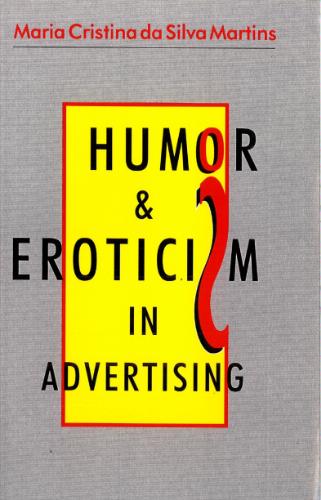
Take A Peek Behind the Advertising Curtain in Humor and Eroticism in Advertising by Maria Cristina da Silva Martins (SDSU Press)


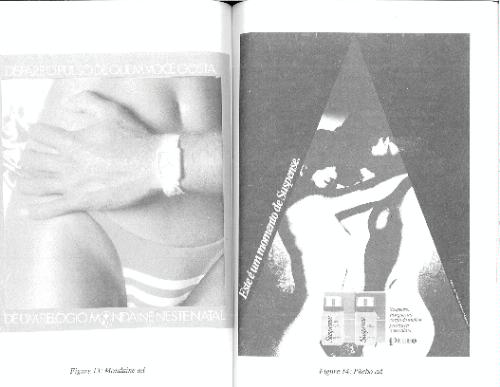
Humor & Eroticism in Advertising succeeds in many different, exciting ways. Within its pages, Maria Cristina da Silva Martins explores the aesthetic and political dimensions of print advertisements and how these function to activate desire and maintain the cycles of consumption in late-capitalist society. Using as her point of departure advertisements published in Brazilian magazines in the eighties, Maria Cristina da Silva Martins shows how the humor/eroticism relation, inserted in the connections between the verbal and the visual, unleashes, in a non-simplistic and unusual manner, political and aesthetic implications between the advertisement and its cultural context. For fans and scholars whose focus is on that of international advertising and marketing, Latin American cultural studies, visual culture and more, Humor & Eroticism in Advertising is a must-have!


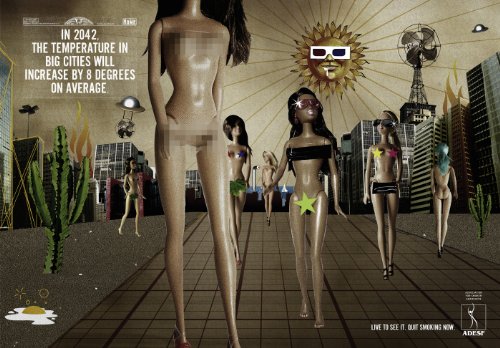
Below are some examples of Brazilian advertisements as well as some images from the book:


Friday, July 06, 2012

Be a Part of the Discussion in, "Thomas Paine: Common Sense for the Modern Era" edited by Ronald F. King and Elsie Begler

            We all know what it is, and we all think we use it flawlessly, but, do we really? Defined as, “sound and prudent judgment based on a simple perception of the situation,” ‘common sense’ is not only a term used universally, but it is also the title of Thomas Paine’s revolutionary pamphlet. This founding father was respected internationally and his philosophies are still highly respected. Paine’s political advances pushed for America’s independence from Britain. Through his powerful prose he was able to sway the minds of a growing nation. San Diego State University held a conference in 2005 that explored the contributions of Paine’s, ‘Common Sense.’ The lively discussion was far from the traditional history lecture as the educated speakers made new connections between Paine’s eighteenth-century ideas and modern day issues. These discussions found in, “Thomas Paine: Common Sense for the Modern Era” edited by, Ronald F. King and Elsie Begler, give life to Paine’s theories in a whole new way. With these thought-provoking discussions we can get one step closer to having some of that much-needed ‘common sense.’


SDSU’s conference is not the only time in which Paine’s philosophies have been used to analyze modern day politics. Check out this video of Bob Basso as he takes on Paine’s image and ideas in order to bring some of Paine's teachings back to the nation.


Saturday, June 30, 2012

SDSU Press: The Ancient Secrets of the Tipai, Tipai Ethnographic Notes by WIlliam D. Hohenthal Jr.

Tipai Hunters
Delve into the mysterious and nearly-forgotten world of the Tipai Native Americans with William D. Hohenthal Jr's Tipai Enthographic Notes. The Native peoples of Baja California are a crucial part of American history often overlooked by scholars; this breathtaking paperback sheds new light on a topic previously considered insignificant.

Complete with brilliant illustrations of camps and settlements, this edition is no doubt the perfect addition to any Native Americanist, Anthropologist, Historian, or Summer Reader's collection. While more recent publications on the Tipai may have been released in the past 14 years, none command the same authority, nor compile the same breadth of knowledge, as Hohenthal's original piece.

Told in a comprehensive, authoritative diction, Hohenthal's recounting of the Tipai Natives' story in the mid 19th century opens the eyes to the lives, tragedies, and triumphs of this people.

Typeset in commanding Times New Roman, and in a stunning crimson cover, it does not fail to catch the eye. Truly for anyone with even a passive interest in Native Americans, Tipai Ethnographic Notes is a must-have. Don't hesitate, purchase your copy today!
http://www.amazon.com/Tipai-Ethnographic-Notes-Mid-Century-Anthropological/dp/0879191457/ref=sr_1_fkmr0_1?ie=UTF8&qid=1341264297&sr=8-1-fkmr0&keywords=Tipai+Enthographic+Notes

Monday, June 18, 2012

Explore the secrets of the Mayans in Everett Jackson's Four Trips to Antiquity (SDSU Press)


Dive into this fantastic narrative about an artist who loses himself to the antiquity and depth of ancient art! Told in humorous and incisive fashion, the tales of his trips to antiquity challenge the reader to consider the subject of sculpture not as "art" but as a doorway to the heart. The novel includes copious illustrations done by the Everett Jackson himself at the sites visited on his travels.

Available now through SDSU Press.

Have a taste of the mysterious sculptures found within:


It is important to note that the end of 2012 (and, subsequently, the world) rapidly approaches! Perhaps you might discover something in the sculptures that could save us all!


More shots from this gorgeous book:


back cover ~ click to enlarge

front flap ~ click to enlarge

back flap ~ click to enlarge


center spread ~ click to enlarge


Tuesday, June 12, 2012

Uncover the Mystery with the Dead Sea Scrolls by Risa Levitt Kohn


Movies, books, fairytales, and legends based on grand discoveries have always been of great intrigue to people of all ages and cultures. There is a human craving for knowledge of the past, of the lives that existed thousands of years before us. San Diego State University along with the San Diego Natural History Museum brought to print the groundbreaking findings with Religious Studies Professor Risa Levitt Kohn's Dead Sea Scrolls--published in collaboration with SDSU Press.
This gorgeous trade paperback not only features vivid images of scrolls created over 2,000 years ago, but it also provides information surrounding their discovery and translation. Findings such as these are valuable for people of varying fields of study including history, anthropology, literature, philosophy, linguistics, and religious studies. In their prefatory piece, Joan and Irwin Jacobs note that these scrolls have been considered to be "among the greatest archeological treasures ever found"(10). Through these scrolls we are able to peek into the writings, language, and beliefs from the past. With the Dead Sea Scrolls, we are finally able be a tangible part of the stories of exploration, mystery and discovery! 
Follow this link for an extensive interview with the author, Risa Levitt Kohn.

Click here to purchase Dead Sea Scrolls from SDSU Press.

Here's a recent streaming video on the historical significance of the scrolls:


Saturday, June 02, 2012

Tijuana: 1964 | A New Special Printing, Perfect for the High School or University Classroom

SDSU PRESS is not a hipster following
the latest rage (though we do fancy our
new sideburns); we've always adored Tijuana!

Check out our new special 2nd printing of TIJUANA 1964...


Tijuana 1964: Una vision fotografica e historica

fotografias Harry W. Crosby ; ensayo Paul Ganster, David Pinera Ramirez Antonio Padilla; edited by Paul Ganster


front cover


back cover


Tijuana is ON FIRE!  Check out Anthony Bourdain's latest NO RESERVATIONS episode on TJ....


Wednesday, May 30, 2012

Special Edition - Limited Release of Border Lives! Personal Essay on the U.S.-Mexico Border (Harry Polkinhorn, et al., eds.)


We here at the SDSU Press are excited to announce the limited edition release of BORDER LIVES: Personal Essay on the U.S.-Mexico Border. With only 200 numbered copies available, this 2nd edition comes with an excitingly redesigned cover, is filled with illustrations, and dives into creative non-fiction personal essays from esteemed writers such as James Bradley, David Clayton, José Manuel Di Bella, Carlos Fabián Saravia, D. Emily Hicks, Ramona Mejía, William A. Nericcio, Harry Polkinhorn, Leobardo Saravia Quiroz, Gabriel Trujillo Muñoz. The seventh in the Binational Press border series, Border Lives explores the living, changing genre of the personal essay as it is being practiced along the U.S.-Mexico Border and comes with both Spanish and English translations of each essay back to back!
Edited by Harry Polkinhorn, Rogelio Reyes, & Gabriel Trujullo Muñoz, BORDER LIVES: Personal Essay on the U.S.-Mexico Border is available now for a limited tim through the SDSU Press!


Preview a few of the book's ample abstract illustrations:


From an essay by D. Emily Hicks
Also from a D. Emily Hicks essay
From an essay by William A. Nericcio

Monday, May 14, 2012

To Anthropologists And Explorers of Culture (that means you, Indiana Jones)--The World of the Tipai available through our Tipai Ethnographic Notes


front cover

Jerry Moore, Professor of Anthropology at California State University, Dominguez Hills calls   Ethnographic Notes: A Baja California Indian Community at Mid-Century a "salvaged treasure."

American Indian Studies Professor at San Diego State, Richard L. Carrico, praises the book for bringing "new life" to the work of anthropologist William D. Hohenthal.

And Ken Hedges, Curator at the San Diego Museum of Man describes the work as "a vivid account of a living culture making its way in the 20th century while holding onto ancient traditions," adding, "Tipai Ethnographic Notes deserves an honored place on the bookshelf of every California and Baja California anthropologist."

The endorsements are strong, but buy this important historical account and make your own decision.

The book contains incredible ethnographic details about family life, society, religion, government, healing, ethnomedicine and much, much more. Because cultures are constantly evolving, this work provides a snapshot of a way of life that no longer exists.


It's perfect for anyone interested in other cultures, indigenous groups, anthropology, changing societies, religion or the fieldwork of the 1940s--not far off from the time of Indiana Jones, might I add.

Each copy includes a separate, large and detailed map of Baja California during the 1940s, copied from Hohenthal's hand sketches of the area. You'll be hard pressed to find the like anywhere else.

So, buy a copy today (in hardcover or paperback) and let your own anthropological adventure begin.


back cover

click image to enlarge
click here to purchase paperback
click here to purchase hardback

Wednesday, May 09, 2012

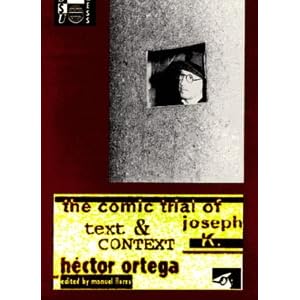
The Unveiling of Humor Within Kafka's Tragic Mask: The Comic Trial of Joseph K.: Text and Context by Héctor Ortega and Edited by Manuel Flores (SDSU Press)

Picture this: a script, a series of analyses, a photographic and stylistic smorgasbord of theatrical visions, a graphic and illuminating glimpse into the tortured, jester-like mind of one of the greatest writers of our time: Franz Kafka. This is exactly what one should expect to find within Héctor Ortega's The Comic Trial of Joseph K.: Text and Context, which soars through literary circles as a triumph of adaptation and critical reflection combined in one text. Readers are, at first, presented with   Héctor Ortega's  "mexicanidad" vision of The Trial, which finds its roots in the humanity and soft-spoken comedy of its tragic characters as they transcend the pages of the beloved author's work. Then, following the play's original script, one is treated to several in-depth analyses of the (often neglected) comic visions within Kafka's works by such esteemed artists and critics as Héctor Ortega, Augusto Monterroso, Hugo Hiriart, Manuel Flores, and D. Emily Hicks. And, to top it all off, throughout the text are smatterings of original artwork by José Luis Cuevas as well as photographs of  Héctor Ortega's original stage production. Edited by Manuel FloresThe Comic Trial of Joseph K.: Text and Context is available now through SDSU Press!

Sunday, May 06, 2012

Iterative Discourse is the Key to a Great Narrative: Danièle Chatelain's Perceiving and Telling: A Study of Iterative Discourse (SDSU Press)


ver wonder what the trick is to writing a captivating narrative? The answer is repetition. Well actually, the answer is a bit more interesting than that. Danièle Chatelain's book, Perceiving and Telling: A Study of Iterative Discourse explores the dynamic of space and time within the art of iterative discourse. Chatelain develops the concept of repetition helping it grow from a boring and flat concept to one that houses the fluidity of perception. Chatelain says, "Perceiving, therefore, should be considered as a central element in the functioning of any narrative" (94). The tricky concepts that go into an excellent narrative are thoroughly dissected as she also studies the division between heterodiegetic and homodiegetic narratives. Writing a narrative can sometimes feel like an overwhelming task, but with Chatelain's insight on the matter (and of course with her glossary on hand) the job will be less daunting and instead become an exciting challenge.

Perceiving and Telling: A Study of Iterative Discourse is on sale via the SDSU Press.