Friday, September 30, 2011

New Jane Goodall Movie | Get the "In the Shadow of Man" Distinguished Lecture Series, SDSU

SDSU Press and San Diego State University are big fans of Jane Goodall (and of primates in general). Click the image opposite to read about JANE'S JOURNEY in the LA Times.


After that, give some thought to ordering San Diego State University Press' JANE GOODALL classic, In the Shadow of Man (Distinguished Graduate Research Lecture, 4th) [Paperback]

Here's a trailer from the new film:


...and an interview with Goodall and Angelina Jolie:

Friday, August 12, 2011

Daniel Quirós' VERANO ROJO now available via AMAZON.COM from SDSU PRESS and HYPERBOLE BOOKS

Click the shopping cart for the instalink to some of Latin America's finest crime fiction!  Here's more on Daniel and his work {en Español} and some shots of the books cover materials...


Tuesday, August 09, 2011

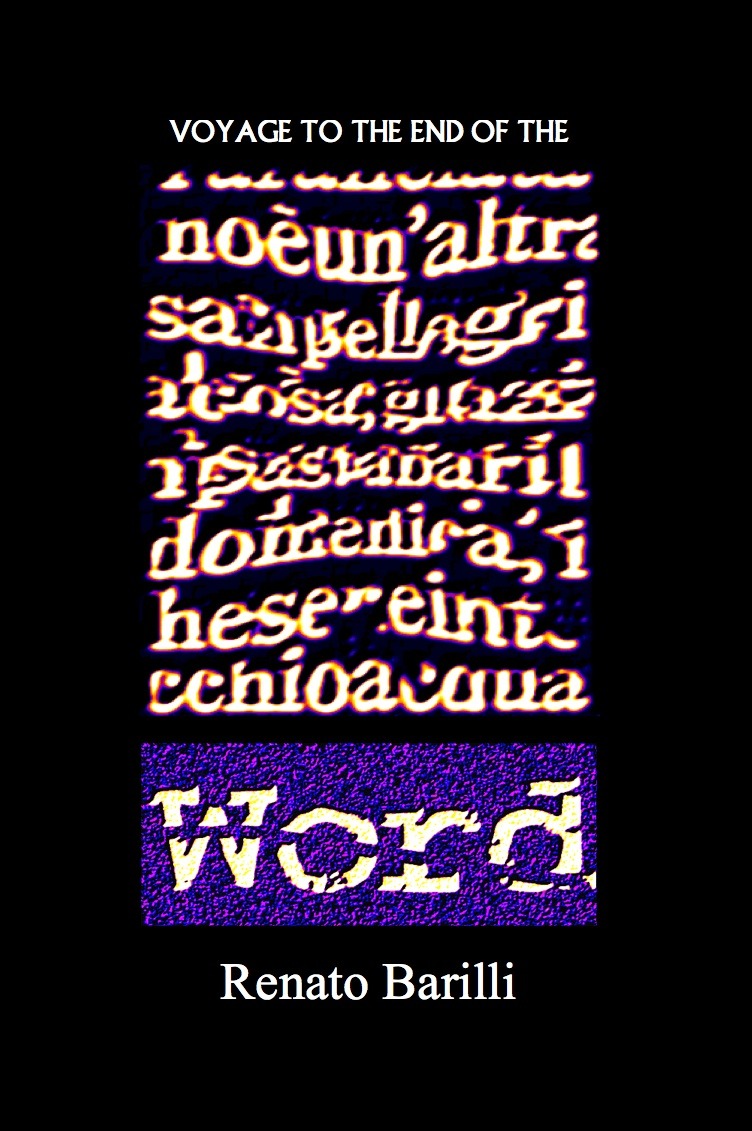
Renato Barilli's Thrilling Enterprise: VOYAGE TO THE END OF THE WORD, from SDSU PRESS


Voyage to the End of the Word argues for a deeper literary dive into “intraverbal” play. Following the notion that conventional ways of expression are completely exhausted, Renato Barilli presents us with the idea that shattering the smallest unit of writing opens up a whole new world of unexplored expression for producers of literature. Inside the microscopic space of letters and in between linked syntagms that symbiotically rely on each other for significance, there exists a broad landscape in which one could play and create refreshingly original work. Barilli explains how the further breakdown of the smallest linguistic units facilitates the exploration of this new world. While it inevitably blocks off the conventional path, it forces the writer to turn around and see the vastness within the words and letters themselves. Barilli makes the reader truly feel the importance and excitement of exploring this literary path. If writers adopt the artistic implements of avant-garde art and music, they increase their navigability through this new world. Once the words are broken down, the boundaries of sight and sound are expanded, allowing the writer to create a unique work consisting of novel sounds, synthesized words, and a visual puzzle.

What makes it more exciting is the fact that the creation can be utterly contemporary with the employment of technology like audio recordings, film, typography, graphic design, and photocopies of original hand-written work. On another front, the venture into the word turns a work of literature into an interactive game between the writer and the reader. It becomes the inviting instigator of a playful, witty banter between
producer and consumer. An anthology of such work is provided in the second half of the book so the reader can experience what Barilli is talking about. His preceding arguments certainly build up anticipation in the reader and he or she arrives at the anthology with the eagerness of a child running towards the jungle gym.
This book is a treasure for anyone in search of a better understanding of experimental literature. Its meticulous discussion of linguistics and aesthetics makes terms and concepts easier to grasp and can be a great educational resource for professors. And a writer or poet in need of new avenues of expression can find this book invaluable in helping them discover that new outlet.
Purchase a copy of Voyage to the End of the Word now.


Arrigo Lora Totino is one of the featured writers in Barilli's anthology. The following video is an example of how audio and video enhances the experimental literary journey. Barilli writes:
"So, for example, the opportunity to work "within" the word, below the phrase, is today strongly called for and facilitated precisely by certain technological developments. The instruments of sound recording (records, electromagnetic tape) have enlarged the phonosphere and made it familiar and accessible to us, thereby rendering the phenomenon of homophony more incisive and present than in the past."
Watch Totino perform his work:


Click here for a larger version of the cover of SDSU PRESS's Barilli volume.

Wednesday, July 20, 2011

Top 5 Reasons to Scoop Up a Copy of Everett Gee Jackson' Goat Tails and Doodlebugs


First reason? It's a gorgeous book! But who is Everett Gee Jackson? and what is Goat Tails and Doodlebugs?  Jackson was a former professor and longtime chair of the SDSU Department of Art (now School of Art, Design, and Art History at San Diego State University). His lavishly illustrated Goat Tails and Doodlebugs reflects on his past, attempting to establish connections to his career as a painter. Unlike his previous books (for instance, Four Trips to Antiquity, also with SDSU Press) that document his experiences painting in Mexico and Central America, Goat Tails and Doodlebugs is a compilation of vignettes tracing all the way back to his early childhood years in Texas up and attempts to discover the progression and development of his artwork (example, below; more here).

Jackson delivers unique stories, both moving and captivating-- each story feels familiar and draws us into this special and intimate part of his life, giving us a real and profound understanding of who he is and how that was bound up with his painting. He shares memories that are emotional and lighthearted at the same time and that have the ability to make us laugh as well as cry. The stories are accompanied by his own illustrations and paintings, beautiful and captivating in themselves, that add much to the overall effect of the book.
The Fishing Barge
Everett Gee Jackson, 1933

Tuesday, June 28, 2011

The Flight of the Eagle: Poetry of the U.S.-Mexican Border

The Flight of the Eagle: Poetry of the U.S.-Mexico Border transforms the voices of eight different poets from the U.S. and Mexico into a beautiful, unique, and moving project.  If we lost you at poetry- maybe you've had a bad experience with it in the past or it's just not your thing- whatever the case may be, these are not your standard poems and are far from what you're used to reading.  Each poet has his/her own unique flavor; there's something, if not more, for everyone inside.   Every section has a different story to tell and a different way of telling it; however, as a whole they seem to stand together as one and speak the same words.  This collection of poetry is for the most part easy to read and accessible to the general public, however, this is not to say that the poems lack literary or academic value; they are in fact full of complex cultural and literary references.

They deal with issues about life on and beyond the U.S.-Mexican border; it is a fusion of experiences specific to border life such as gaining citizenship, adapting to American life, culture clash, mistreatment, and everyday struggles, as well as those more universal such as family, love, sex, loss, heart break, struggle, pain, death, and war.  While border life is for the most part the central focus of these poems, they are relatable, applicable, and insightful to people of all cultures and creeds.  Moreover, this project is not merely a study of the U.S.-Mexican border, but rather of borders in general, dealing with a broad spectrum of borders and liminal spaces such as sexuality, race, culture, and gender, thus reaching out to
all audiences.

This creative compilation of memoir, history, and voice captures and speaks for and about a community/people that fall beneath the radar, that are underrepresented and mistreated daily, and most importantly that when heard can teach us new ways of seeing, understanding, and living in the world; all we have to do is listen, or in this case read.

Listen to Jose Montalvo, one of the featured poets and also an activist, talk about and read some of his poetry!

Tuesday, May 24, 2011

Now Available! pacificREVIEW 2011...

The 2011 edition of pacificREVIEW: A West Coast Arts Review Annual edited by Lindsey Messner with undergraduates and graduate students from SDSU and published by San Diego State University Press; contributors include: Melissa Castillo-Garsow, Doug Cox, Jason Joyce, Paul David, Paris Brown, Shane Roeschlein, Joshua Gage, Vivekanand Jha, Alan Britt, Elisabeth Sharp McKetta, Kristin Berkey-Abbott, Frank Scozzari, Deepak Chaswal, Ken Poyner, James B. Nicola, Eric Barnes, M. Kaat Toy, Janice Pisello, Roger Camp, Kent Cooper, Scott McFarland, Guy J. Jackson, Stephen Lackaye, Catherine McGuire, Darren Fernando, Kelly Talbot, Carroll Susco, and Christopher Mulrooney.

Thursday, April 21, 2011

You Know Where You Are Now: A Look Inside Border Lives

There is no faster or more effective way to mainline the feeling of existential vertigo than spending time along the borderlands dividing Mexico from the United States of America. Life along this border is an incongruous, sensory-overloading experience: visions of ludicrous corporate wealth propelled by extreme social poverty; floating, malleable identities and competing histories; no fixed addresses; no clear, concise version of any one lasting truth to tie it all together.

It’s a psychically battering experience, but a rewarding one as well, in terms of expanded insight and cross-cultural empathy, and SDSU Press’s essay collection Border Lives: Personal Essay on the U.S.-Mexico Border/Vidas Fronterizas: La Crónica en la Frontera México-Estados Unidos , has all three—the battery, the insight, and the empathy—in spades.

The ten essays collected in Border Lives (each one presented back-to-back in Spanish and English translations) offer deeply personal and haunting snapshots of life and death along the border, but amidst the varying tones, backgrounds, and approaches employed by the writers here assembled, some common narrative threads emerge to provide the reader with an explosively visceral experience of life along this interzone of cultural, political, and economic conflict.

Strongest amongst these commonalities is the feeling that to live a border life is to experience a sense of disconnect on a daily basis, but a disconnect one cannot disassociate from. It’s always present, a source code of freeway signs and graffiti tags, bible verses and rock lyrics, corporate sloganeering and calls for la revolución, Prozac prescriptions and cocaine addictions, that constantly throw off one’s effort to express a thought as simply cogent as “This is who I am and this is where I’m from.”

In the end, this disconnect is what renders the essay as the perfect literary form to explore the vast complexities of life on the border. As SDSU Press Director Harry Polkinhorn puts it in the collection’s opening piece, essays “provide us with a unique blend of philosophical meditation, travel impressions, character sketch, autobiographical reference, and journalistic observation, all inflected by the wit, irony, or lofty sentiments which color the quality of their writer’s lives.”

The writers of Border Lives present the reader with stories both intimate in emotion and all-encompassing in scale: Gabriel Trujillo Muñoz undertakes a time-traveling dissection of his youth in northern Mexico and coming-of-age as a rock & roll-loving medical student in Jalisco; William Nericcio questions the tenets of memory and truth while exploring the contrast between border towns like Laredo, Texas, where class, not race, is the dominant factor in the social fabric of society, and San Diego, California, where ethnic and political prejudices assign class to each race; Emily Hicks injects a flair of performance art into her story of betrayal, breakdowns, and single motherhood; and James Bradley, amidst his own personal reflections of border life, ruminates on the United States’ shameful history of land-grabs, political power plays, and military interventions in Mexico, Nicaragua, Honduras, and El Salvador.

Border Lives is an excellent resource for anyone hoping to gain a more comprehensive perspective on life along the U.S-Mexico border, but be warned: You may be thrown off by what you find when you get here. The landscape is jarring, jagged, much of it an industrial wasteland bled dry by corporate interests. People here travel through time-loops and commune with ghosts. The weight of history, and the desperate efforts of those who wish to re-write or wish it away, makes it nearly impossible to know where you’ve been, where you’re going, or who you even are anymore. The only thing that can be known along the border is where you are right now; the rest is up for grabs.


Tuesday, April 12, 2011

Fluxus! Our Best-selling Study of Fluxus by Owen F. Smith...

Click to enlarge
Fluxus: The History of an Attitude is based on the Owen F. Smith's exhaustive archival research tracking the physical remains of this fascinating interdisciplinary and international arts movement that began in the 1960s. In his dynamic introduction, Smith recalls how:

Fluxus was once called 'the most radical and experimental art movement of the sixties,' but for anyone seeking to learn more about the historical nature of Fluxus and its conceptual framework it might more readily seem to be just plain frustrating rather than radical. This is in part the case because Fluxus is historically complex and philosophically difficult to define. This very ambiguity, however, is an aspect of its radicality. Fluxus is both an attitude towards art-making and culture that is not historically limited, and a specific historical group. As an attitude, Fluxus is part of a larger conceptual development that is a significant, although often overlooked, current of the twentieth-century Western avant-garde. This attitude is in part traceable to the network of interrelated ideas about culture, politics, and society explored earlier in the twentieth century by the Futurists, the Dadaists, and the Surrealists. Some of these same ideas were later explored after World War II by artists associated with groups such as Letterism, International Situationism, Nouveau Realisme, and Fluxus itself.

Click to enlarge
Also, Smith claims the Fluxus is still very much alive today and that "Fluxus is by nature anti-reductivist, for it does not seek the illumination of some end or fact but celebrates participation in a non-hierarchal density of experience. In this way Fluxus does not refer to a style or even a procedure as such but to the presence of a totality of social activities. Fluxus seeks to shift from traditional utilitarian-based proscriptions to an open-ended, less evaluative participation in the processes themselves." Smith's singular study is emerging as one of the more important meditations on Fluxus--our SDSU Press volume is provided with a comprehensive bibliography and index.

Order it now from SDSU Press via Amazon.com.

New Books from SDSU PRESS and Hyperbole Books! Mark Wheeler, ed.DARWIN 150 Years of Evolution and Spencer Dew's ACKER Learning for Revolution

Buy these new books by Marc Wheeler and Spencer Dew here; high-res covers for the book appear below--just hit the images to enlarge...


Sunday, March 27, 2011

SDSU PRESS Announcing a New Collection of Essays on Charles Darwin

Sunday, February 20, 2011

Hyperbole Books! Studied in Graphic/Rhetoric Textbook


Hit the image to see it huge; this link for the googlebooks source.


Wednesday, February 16, 2011

New Books Coming Spring 2011 from SDSU Press and Hyperbole Books! Spencer Dew on KATHY ACKER! Mark Wheeler et al on CHARLES DARWIN


Thursday, December 16, 2010

pacREV 2010 has LAUNCHED

Wednesday, December 01, 2010

Beyond the Graying of America: Who Cares? | E. Percil Stanford


Want to live forever?  Tough!  It's impossible (unless you have some mad scientist friends, of course).  If you're really worried about it, take a peek at SDSU Press' Beyond the Graying of America: Who Cares?  This publication is a chronicle of SDSU's Albert W. Johnson University Research Lecture Series in which Dr. Stanford presents and explains two major ideas that have changed the study of gerontology is America: the cultural equity and ethics of aging in the population and the significant role aging Americans have in our society.  


Stanford elaborates on how growing old is, indeed, a “serious social, economic, and sometimes political issue,” for he estimates that by 2030, that the 85+ age bracket will represent one in every eleven older persons (26).  This, of course, is diversified b the many ethnic groups that make up the United States.  Within these diverse groups, however, are four similar concerns: “1. the lack of adequate income; 2. health; 3. high energy costs; 4. housing, 5. transportation; and 6. social support systems” (27).  Stanford continues by stating that with these worries are predominantly popular within immigrant populations, and that these immigrants will create a change within the profile of San Diego’s aged population and the overall population of the city.  He believes that the Baby Boomers are also contributing to this; “as the median age of the population increases, life expectancies, falling fertility rates, substantial in-migration of employment in aging persons, and a large number of retirement-related migrants add to the reasons the median age is apt to rise beyond the age of 30” (28).  Life styles and government programs must change to meet these social changes – consequences of the aged population will not wait.

In the second half of the lecture, Stanford describes the aged population’s significant role in American society, that the aged are not and should not be seen as a burden, for
“the future, as we know it, will have its foundation laid by the elderly.  Their wisdom, insights, and dedication to preserving our society will have been the foundation on which our future lies.  We would be extremely uninformed to assume that the elderly would not be an essential element in framing our future.  It is the elderly moreso than anyone who can begin to anticipate the nature of things to come.”
           
The “era of the aged” is upon us – graying is a sign of maturity, not of decay (45).  See?  Nothing to worry about.  Aging is something to expect and rejoice about.  When you are 85 years old, you will provide the future with everything they need to know about how to succeed.  How could that bring you down???

Since E. Percil Stanford’s lecture, “he has served as the Regional Director for the West Region for AARP since 2002 and as the interim director of the National AARP State Affairs Department working on state advocacy issues.  Dr. Stanford was given the title of Chief Diversity Officer for AARP in December 2005.” He has been a pioneer for gerontology and of the aged population.  Bravo!